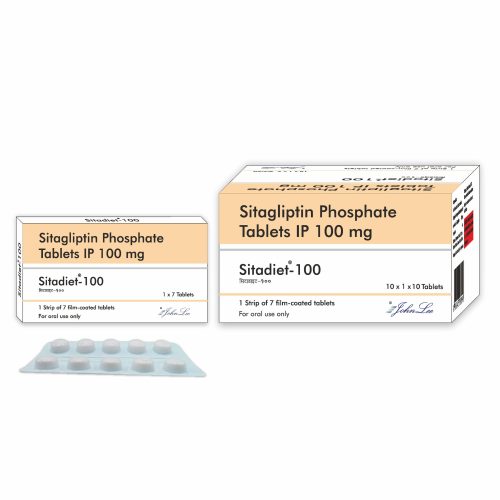
Sitadiet 100 – Sitagliptin Phosphate Monohydrate IP 100 Mg
Sitagliptin Phosphate Monohydrate IP 100 Mg
Exporter, Distributor Drop shipper to Russia, Brazil, Colombia, Latin America And East Asia
Sitadiet 100 contains Sitagliptin Phosphate Monohydrate IP 100 mg, a DPP-4 inhibitor indicated for the management of Type 2 Diabetes Mellitus. It helps improve glycemic control by increasing incretin hormone levels, enhancing glucose-dependent insulin secretion, and reducing glucagon production while maintaining a low risk of hypoglycemia.
|
Contain |
Sitagliptin Phosphate Monohydrate IP 100 Mg |
|---|---|
|
Strength |
100 Mg |
|
Packaging |
10X1X10TAB |
|
Category |
Categories: Diabetic Care |
|
Manufacturer |
Johnlee Pharmaceuticals Pvt. Ltd |
|
Brand |
Sitadiet |
Product Overview
Sitadiet 100 contains Sitagliptin Phosphate Monohydrate, a selective dipeptidyl peptidase-4 (DPP-4) inhibitor developed for the effective management of Type 2 Diabetes Mellitus. It is widely prescribed to improve blood glucose control in adults whose diabetes cannot be adequately managed through diet, exercise, and lifestyle modifications alone. Sitagliptin offers a targeted approach to diabetes management by enhancing the body’s natural incretin system, helping regulate blood glucose levels in a glucose-dependent manner.
Sitadiet 100 works by increasing the levels of incretin hormones, which stimulate insulin secretion after meals and reduce the release of glucagon from the pancreas. This dual mechanism helps lower both fasting and postprandial blood glucose levels without causing excessive insulin release when blood glucose is normal. As a result, Sitagliptin provides effective glycemic control while maintaining a lower risk of hypoglycemia compared to some traditional antidiabetic medications.
Sitadiet 100 may be prescribed as monotherapy or in combination with other oral antidiabetic agents or insulin depending on the patient’s clinical condition and treatment requirements. It is commonly incorporated into comprehensive diabetes management plans that include dietary modifications, regular physical activity, and routine blood glucose monitoring.
Manufactured under stringent pharmaceutical quality standards, Sitadiet 100 delivers consistent efficacy, safety, and reliability, making it a trusted therapeutic option for healthcare professionals managing Type 2 Diabetes Mellitus.
How It Works
Sitagliptin inhibits the DPP-4 enzyme, preventing the breakdown of incretin hormones such as GLP-1 and GIP. Increased incretin levels stimulate glucose-dependent insulin secretion, suppress glucagon release, reduce hepatic glucose production, and help maintain stable blood glucose levels throughout the day.
Therapeutic Applications
Sitadiet 100 may be prescribed for the management of:
- Type 2 Diabetes Mellitus
- Blood Glucose Control
- Long-Term Glycemic Management
- Combination Therapy with other Antidiabetic Medications
- Patients inadequately controlled by diet and exercise alone
Key Benefits
- Helps effectively lower fasting and postprandial blood glucose levels.
- Enhances glucose-dependent insulin secretion.
- Reduces glucagon production and hepatic glucose output.
- Low risk of hypoglycemia when used as prescribed.
- Suitable for monotherapy or combination antidiabetic therapy.
- Manufactured under stringent pharmaceutical quality standards.
Quality Commitment
Vinix Biopharma is committed to delivering high-quality antidiabetic medicines manufactured in accordance with stringent pharmaceutical quality standards. Sitadiet 100 undergoes comprehensive quality assurance and rigorous testing to ensure safety, efficacy, consistency, and reliability. Every batch is carefully evaluated to maintain product integrity and support optimal patient care.
Storage Information
Store in a cool, dry place below 30°C. Protect from moisture and direct sunlight. Keep out of reach of children.
Disclaimer
Sitadiet 100 should be used only under the supervision of a qualified healthcare professional. Dosage and duration of treatment should be determined by the treating physician based on the patient’s clinical condition, medical history, and therapeutic requirements.